Looking for More information? Check out These great books!

Women's Studies Books

Invisible Women: Data Bias in a World Designed for Men by Caroline Criado Pérez
Celebrated feminist advocate Caroline Criado Perez investigates the shocking root cause of gender inequality and research in Invisible Women, diving into women’s lives at home, the workplace, the public square, the doctor’s office, and more. Built on hundreds of studies in the US, the UK, and around the world, and written with energy, wit, and sparkling intelligence, this is a groundbreaking, unforgettable exposé that will change the way you look at the world.
Men Explain Things to Me by Rebecca Solnit
In her comic, scathing essay “Men Explain Things to Me,” Rebecca Solnit took on what often goes wrong in conversations between men and women. She wrote about men who wrongly assume they know things and wrongly assume women don’t, about why this arises, and how this aspect of the gender wars works, airing some of her own hilariously awful encounters.
In Defense of Witches: The Legacy of the Witch Hunts and Why Women Are Still on Trial by Mona Choll
This feminist treatise examines how witch hunts from the 1300s to 1700s targeting single women, childless women, and elderly women made an oppressive impact on those populations that can be felt in the modern day.
Books for White Women about Race
So You Want to Talk About Race by Ijeoma Oluo
In So You Want to Talk About Race, Ijeoma Oluo guides readers of all races through subjects ranging from police brutality and cultural appropriation to the model minority myth in an attempt to make the seemingly impossible possible: honest conversations about race, and about how racism infects every aspect of American life.
White Rage: The Unspoken Truth of Our Racial Divide by Carol Anderson
Anderson pulls back the veil that has long covered actions made in the name of protecting democracy, fiscal responsibility, or protection against fraud, rendering visible the long lineage of white rage. Compelling and dramatic in the unimpeachable history it relates, White Rage will add an important new dimension to the national conversation about race in America.
White Women: Everything You Already Know About Racism And How To Do Better by Regina Jackson
In the vein of So You Want to Talk About Race and Me and White Supremacy, a no-holds-barred guidebook aimed at white women who want to stop being nice and start dismantling white supremacy.
White Tears/Brown Scars: How White Feminism Betrays Women of Color by Ruby Hamad
This explosive book of history and cultural criticism reveals how white feminism has been used as a weapon of white supremacy and patriarchy deployed against Black and Indigenous women, and women of color.
The White Allies Handbook by Lecia Michelle
Black women have always been the driving force behind real change in this country—especially when it comes to racial justice work. But they shouldn’t have to do it alone. If you’re ready to stop standing on the sidelines and become anti-racist instead of passively “not racist,”, then this book is what you need. In these pages, Lecia Michelle—founder of the popular Facebook group “Real Talk: WOC and Allies for Racial Justice and Anti-Oppression”—invites you to join her on the frontlines. She shows you what it takes to become an effective ally—including helping you recognize that an important part of the fight is within yourself.
In this book, you’ll discover:
• How to have difficult conversations about white supremacy, racism, and white privilege
• How to listen to criticism without defensiveness
• Why it’s harmful to ignore race or claim to be colorblind
• How to expand your racial justice circle by joining groups led by Black women and cultivating a group of like-minded allies
• How to recognize and address the harmful pattern of perfectionism and performative allyship
Racism can only be defeated if white people educate themselves and actively engage in antiracism work, especially in their inner circles. Every white person has the capacity either to weaponize their whiteness or to use it for good. With this book, you’ll learn how to change from someone who defends and protects racism to someone who fights against it. And you’ll become an example to others that true allies are made, not born.
The Trouble With White Women: A Counterhistory of Feminism by Kyla Schuller
Women including Elizabeth Cady Stanton, Margaret Sanger, and Sheryl Sandberg are commonly celebrated as leaders of feminism. Yet they have fought for the few, not the many. As award-winning scholar Kyla Schuller argues, their white feminist politics dispossess the most marginalized to liberate themselves.
In The Trouble with White Women, Schuller brings to life the two-hundred-year counter history of Black, Indigenous, Latina, poor, queer, and trans women pushing back against white feminists and uniting to dismantle systemic injustice. These feminist heroes such as Frances Harper, Harriet Jacobs, and Pauli Murray have created an anti-racist feminism for all. But we don’t speak their names and we don’t know their legacies. Unaware of these intersectional leaders, feminists have been led down the same dead-end alleys generation after generation, often working within the structures of racism, capitalism, homophobia, and transphobia rather than against them.
Building a more just feminist politics for today requires a reawakening, a return to the movement’s genuine vanguards and visionaries. Their compelling stories, campaigns, and conflicts reveal the true potential of feminist liberation. The Trouble with White Women gives feminists today the tools to fight for the flourishing of all.
I’m Still Here: Black Dignity In A World Made For Whiteness by Austin Channing Browne
Austin Channing Brown’s first encounter with a racialized America came at age seven, when she discovered her parents named her Austin to deceive future employers into thinking she was a white man. Growing up in majority-white schools and churches, Austin writes, “I had to learn what it means to love blackness,” a journey that led to a lifetime spent navigating America’s racial divide as a writer, speaker, and expert helping organizations practice genuine inclusion.
In a time when nearly every institution (schools, churches, universities, businesses) claims to value diversity in its mission statement, Austin writes in breathtaking detail about her journey to self-worth and the pitfalls that kill our attempts at racial justice. Her stories bear witness to the complexity of America’s social fabric—from Black Cleveland neighborhoods to private schools in the middle-class suburbs, from prison walls to the boardrooms at majority-white organizations.
For readers who have engaged with America’s legacy on race through the writing of Ta-Nehisi Coates and Michael Eric Dyson, I’m Still Here is an illuminating look at how white, middle-class, Evangelicalism has participated in an era of rising racial hostility, inviting the reader to confront apathy, recognize God’s ongoing work in the world, and discover how blackness—if we let it—can save us all.
Women's History Books
Recasting the Vote: How Women of Color Transformed the Suffrage Movement by Cathleen D. Cahill
The trails for women’s suffrage were also blazed by groups of women from diverse backgrounds, in all American territories. By focusing on intersectionality, Recasting the Vote uncovers the unsung heroes of the suffrage movement.
Revolutionary Women: 50 Women of Color Who Reinvented the Rules by Ann Shen
Groundbreaking women of color are honored in this kaleidoscope of change makers. Mini histories of each figure are accompanied by vibrant portraits, with sidebars included to connect them to overarching social movements.
A Short History of Queer Women by Kirsty Loehr
While women’s place in history is often downplayed, the history of queer women has been downright ignored. Kirsty Loehr unpacks the important narrative of these strong, queer women throughout history in this humorous and wide-ranging book.
Women in the Civil War by Larry G Eggleston
When the Civil War broke out, women answered the call for help. They broke away from their traditional roles and served in many capacities, some of them even going so far as to disguise themselves as men and enlist in the army. Estimates of such women enlistees range from 400 to 700. About 60 women soldiers were known to have been killed or wounded. This book tells the stories of more than 60 of these women.
Before Roe v. Wade by Linda Greenhouse and Reva Siegel
Linda Greenhouse is a Pulitzer Prize-winning journalist who covered the Supreme Court for 30 years for the New York Times, and Reva Siegel is a renowned professor and former deputy dean at Yale Law School.
In this fascinating book, the two writers explore the arguments that circled the decision in Roe v. Wade. This book provides fascinating cultural and political context for the decision. You can even get a free PDF version courtesy of the Yale Law School library.
Rise of the Rocket Girls by Nathalia Holt
The true story of a group of elite young women at NASA’s Jet Propulsion Laboratory who shared a love of math and whose work influenced military rocket design, brought us the first American satellite, shaped lunar missions, and ushered in a new era of space exploration that continues today at NASA where some of the women still work—now as senior engineers directing our missions to Mars and Venus.
The Story of Jane: The Legendary Underground Feminist Abortion Service by Laura Kaplan
The Story of Jane recounts the evolution of the Abortion Counseling Service, code name Jane, the underground group of heroic women that provided low-cost abortion services in Chicago in the years before the procedure was legalized.
Organized in 1969 and active until the opening of the first legal abortion clinics in 1973, Jane initially counseled women and referred them to abortion providers who set prices and conditions. As Jane grew, so did the group's capacity to protect its clients. Eventually, determined to reclaim women's reproductive power in any way they were able, many members of Jane learned to perform abortions themselves.
Women Scientists in America: Struggles and Strategies to 1940 by Margaret W. Rossiter
In volume one of this landmark study, focusing on developments up to 1940, Margaret Rossiter describes the activities and personalities of the numerous women scientists -- astronomers, chemists, biologists, and psychologists -- who overcame extraordinary obstacles to contribute to the growth of American science. This remarkable history recounts women's efforts to establish themselves as members of the scientific community and examines the forces that inhibited their active and visible participation in the sciences.
Women Scientists in America: Before Affirmative Action, 1940-1972 by Margaret W. Rossiter
Winner of the Pfizer Award for Outstanding Book in the History of Science.
Margaret Rossiter's widely hailed Women Scientists in America: Struggles and Strategies to 1940 marked the beginning of a pioneering effort to interpret the history of American women scientists. That effort continues in this provocative sequel that covers the crucial years of World War II and beyond.
Rossiter begins by showing how the acute labor shortage brought on by the war seemed to hold out new hope for women professionals, especially in the sciences. But the public posture of welcoming women into the scientific professions masked a deep-seated opposition to change.
Rossiter proves that despite frustrating obstacles created by the patriarchal structure and values of universities, government, and industry, women scientists made genuine contributions to their fields, grew in professional stature, and laid the foundation for the breakthroughs that followed 1972.
Women Scientists in America: Forging a New World since 1972 by Margaret W. Rossiter
The third volume of Margaret W. Rossiter’s landmark survey of the history of American women scientists focuses on their pioneering efforts and contributions from 1972 to the present. Central to this story are the struggles and successes of women scientists in the era of affirmative action. Scores of previously isolated women scientists were suddenly energized to do things they had rarely, if ever, done before―form organizations and recruit new members, start rosters and projects, put out newsletters, confront authorities, and even fight (and win) lawsuits.
Rossiter follows the major activities of these groups in several fields―from engineering to the physical, biological, and social sciences―and their campaigns to raise consciousness, see legislation enforced, lobby for passage of the Equal Rights Amendment, and serve as watchdogs of the media.
This comprehensive volume also covers the changing employment circumstances in the federal government, academia, industry, and the nonprofit sector and discusses contemporary battles to increase the number of women members of the National Academy of Science and women presidents of scientific societies.
Political Books

Homegrown: Timothy McVeigh and the Rise of Right-Wing Extremism by Jeffrey Toobin
The definitive account of the 1995 Oklahoma City bombing and the enduring legacy of Timothy McVeigh, leading to the January 6 insurrection—from acclaimed journalist Jeffrey Toobin.
How Democracies Die By Steven Levitsky and Daniel Ziblatt
Trump’s presidency has raised a question that many of us never thought we’d be asking: Is our democracy in danger? Harvard professors Steven Levitsky and Daniel Ziblatt have spent more than twenty years studying the breakdown of democracies in Europe and Latin America, and they believe the answer is yes. Democracy no longer ends with a bang—in a revolution or military coup—but with a whimper: the slow, steady weakening of critical institutions, such as the judiciary and the press, and the gradual erosion of long-standing political norms. The good news is that there are several exit ramps on the road to authoritarianism. The bad news is that, by electing Trump, we have already passed the first one.
Drawing on decades of research and a wide range of historical and global examples, from 1930s Europe to contemporary Hungary, Turkey, and Venezuela, to the American South during Jim Crow, Levitsky and Ziblatt show how democracies die. Now the question is, can our democracy be saved?
The 48 Laws of Power by Robert Greene
In the book that People magazine proclaimed “beguiling” and “fascinating,” Robert Greene and Joost Elffers have distilled three thousand years of the history of power into 48 essential laws by drawing from the philosophies of Machiavelli, Sun Tzu, and Carl Von Clausewitz and also from the lives of figures ranging from Henry Kissinger to P.T. Barnum.
Caste: The Origins of Our Discontents by Isabel Wilkerson
The Pulitzer Prize-winning author of The Warmth of Other Suns examines the unspoken caste system that has shaped America and shows how our lives today are still defined by a hierarchy of human divisions.
How Fascism Works: The Politics of Us and Them by Jason Stanley
Alarmed by the pervasive rise of fascist tactics both at home and around the globe, Stanley focuses here on the structures that unite them, laying out and analyzing the ten pillars of fascist politics—the language and beliefs that separate people into an “us” and a “them.” He knits together reflections on history, philosophy, sociology, and critical race theory with stories from contemporary Hungary, Poland, India, Myanmar, and the United States, among other nations.
By uncovering disturbing patterns that are as prevalent today as ever, Stanley reveals that the stuff of politics—charged by rhetoric and myth—can quickly become policy and reality. Only by recognizing fascists politics, he argues, may we resist its most harmful effects and return to democratic ideals.
On Tyranny by Timothy Snyder
The Founding Fathers tried to protect us from the threat they knew, the tyranny that overcame ancient democracy. Today, our political order faces new threats, not unlike the totalitarianism of the twentieth century. We are no wiser than the Europeans who saw democracy yield to fascism, Nazism, or communism. Our one advantage is that we might learn from their experience.
On Tyranny is a call to arms and a guide to resistance, with invaluable ideas for how we can preserve our freedoms in the uncertain years to come.
Other U.S. HIstory Books

The End of the Myth By Greg Grandin
In The End of the Myth, acclaimed historian Greg Grandin explores the meaning of the frontier throughout the full sweep of U.S. history – from the American Revolution to the War of 1898, the New Deal to the election of 2016. For centuries, he shows, America’s constant expansion – fighting wars and opening markets – served as a “gate of escape,” helping to deflect domestic political and economic conflicts outward. But this deflection meant that the country’s problems, from racism to inequality, were never confronted directly. And now, the combined catastrophe of the 2008 financial meltdown and our unwinnable wars in the Middle East have slammed this gate shut, bringing political passions that had long been directed elsewhere back home.
It is this new reality, Grandin says, that explains the rise of reactionary populism and racist nationalism, the extreme anger and polarization that catapulted Trump to the presidency.
The Second Founding By Eric Foner
An authoritative history by the preeminent scholar of the Civil War era, The Second Founding traces the arc of the three foundational Reconstruction amendments from their origins in antebellum activism and adoption amidst intense postwar politics to their virtual nullification by narrow Supreme Court decisions and Jim Crow state laws. Today these amendments remain strong tools for achieving the American ideal of equality, if only we will take them up.
Thinking About History By Sara Maza
What distinguishes history as a discipline from other fields of study? That's the animating question of Sarah Maza’s Thinking About History, a general introduction to the field of history that revels in its eclecticism and highlights the inherent tensions and controversies that shape it.
Designed for the classroom, Thinking About History is organized around big questions: Whose history do we write, and how does that affect what stories get told and how they are told? How did we come to view the nation as the inevitable context for history, and what happens when we move outside those boundaries? What is the relation among popular, academic, and public history, and how should we evaluate sources? What is the difference between description and interpretation, and how do we balance them? Maza provides choice examples in place of definitive answers, and the result is a book that will spark classroom discussion and offer students a view of history as a vibrant, ever-changing field of inquiry that is thoroughly relevant to our daily lives.
Palo Alto By Malcolm Harris
In PALO ALTO, the first comprehensive, global history of Silicon Valley, Malcolm Harris examines how and why Northern California evolved in the particular, consequential way it did, tracing the ideologies, technologies, and policies that have been engineered there over the course of 150 years of Anglo settler colonialism, from IQ tests to the "tragedy of the commons," racial genetics, and "broken windows" theory. The Internet and computers, too. It's a story about how a small American suburb became a powerful engine for economic growth and war, and how it came to lead the world into a surprisingly disastrous 21st century. PALO ALTO is an urgent and visionary history of the way we live now, one that ends with a clear-eyed, radical proposition for how we might begin to change course.
When the Clock Broke By John Ganz
In When the Clock Broke, John Ganz dissects a country in extremis. As the Cold War consensus ended, Americans exhumed old demons and created some new ones. A culture war was declared on liberal elites, free trade was equated with the “giant sucking sound” of jobs lost to Mexico, and rowdy talk radio hosts forged bonds with audiences undergoing an “epidemic of loneliness.” Increasingly, the Republican Party was the haven of the alienated and angry. When Bill Clinton won the presidency, it seemed the center had held―temporarily.
Ranging from Ruby Ridge to the Chinese restaurant in Virginia where “paleoconservatives” devised a new politics for “Middle American Radicals,” Ganz offers a rollicking exposé of the end of the post–World War II order―and the advent of a new, more berserk America.
The Jakarta Method By Vincent Bevins
In 1965, the US government helped the Indonesian military kill approximately one million innocent civilians—eliminating the largest Communist Party outside China and the Soviet Union and inspiring other copycat terror programs.
In this bold and comprehensive new history, Vincent Bevins draws from recently declassified documents, archival research, and eyewitness testimony to reveal a shocking legacy that spans the globe. For decades, it’s been believed that the developing world passed peacefully into the US-led capitalist system. The Jakarta Method demonstrates that the brutal extermination of unarmed leftists was a fundamental part of Washington’s final triumph in the Cold War.
How to Hide an Empire By Daniel Immerwahr
In How to Hide an Empire, Daniel Immerwahr tells the fascinating story of the United States outside the United States. In crackling, fast-paced prose, he reveals forgotten episodes that cast American history in a new light. We travel to the Guano Islands, where prospectors collected one of the nineteenth century’s most valuable commodities, and the Philippines, site of the most destructive event on U.S. soil. In Puerto Rico, Immerwahr shows how U.S. doctors conducted grisly experiments they would never have conducted on the mainland and charts the emergence of independence fighters who would shoot up the U.S. Congress.
In the years after World War II, Immerwahr notes, the United States moved away from colonialism. Instead, it put innovations in electronics, transportation, and culture to use, devising a new sort of influence that did not require the control of colonies. Rich with absorbing vignettes, full of surprises, and driven by an original conception of what empire and globalization mean today, How to Hide an Empire is a major and compulsively readable work of history.
The Shock Doctrine By Naomi Klein
In her groundbreaking reporting, Naomi Klein introduced the term "disaster capitalism." Whether covering Baghdad after the U.S. occupation, Sri Lanka in the wake of the tsunami, or New Orleans post-Katrina, she witnessed something remarkably similar. People still reeling from catastrophe were being hit again, this time with economic "shock treatment," losing their land and homes to rapid-fire corporate makeovers.
The Shock Doctrine retells the story of the most dominant ideology of our time, Milton Friedman's free market economic revolution. In contrast to the popular myth of this movement's peaceful global victory, Klein shows how it has exploited moments of shock and extreme violence in order to implement its economic policies in so many parts of the world from Latin America and Eastern Europe to South Africa, Russia, and Iraq.
At the core of disaster capitalism is the use of cataclysmic events to advance radical privatization combined with the privatization of the disaster response itself. Klein argues that by capitalizing on crises, created by nature or war, the disaster capitalism complex now exists as a booming new economy, and is the violent culmination of a radical economic project that has been incubating for fifty years.
Dark Money By Jane Mayer
Why is America living in an age of profound and widening economic inequality? Why have even modest attempts to address climate change been defeated again and again? Why do hedge-fund billionaires pay a far lower tax rate than middle-class workers? In a riveting and indelible feat of reporting, Jane Mayer illuminates the history of an elite cadre of plutocrats—headed by the Kochs, the Scaifes, the Olins, and the Bradleys—who have bankrolled a systematic plan to fundamentally alter the American political system. Mayer traces a byzantine trail of billions of dollars spent by the network, revealing a staggering conglomeration of think tanks, academic institutions, media groups, courthouses, and government allies that have fallen under their sphere of influence. Drawing from hundreds of exclusive interviews, as well as extensive scrutiny of public records, private papers, and court proceedings, Mayer provides vivid portraits of the secretive figures behind the new American oligarchy and a searing look at the carefully concealed agendas steering the nation. Dark Money is an essential book for anyone who cares about the future of American democracy.
A Peoples History of the United States By Howard Zinn
Historian Howard Zinn’s A People’s History of the United States chronicles American history from the bottom up, throwing out the official narrative taught in schools—with its emphasis on great men in high places—to focus on the street, the home, and the workplace.
Known for its lively, clear prose as well as its scholarly research, itis the only volume to tell America's story from the point of view of—and in the words of—America's women, factory workers, African-Americans, Native Americans, the working poor, and immigrant laborers. As Zinn shows, many of our country's greatest battles—the fights for a fair wage, an eight-hour workday, child-labor laws, health and safety standards, universal suffrage, women's rights, racial equality—were carried out at the grassroots level, against bloody resistance.
Covering Christopher Columbus's arrival through President Clinton's first term, A People's History of the United States features insightful analysis of the most important events in our history. This edition also includes an introduction by Anthony Arnove, who wrote, directed, and produced The People Speak with Zinn and who coauthored, with Zinn, Voices of a People’s History of the United States.
The Color of Law By Richard Rothstein
In this groundbreaking history of the modern American metropolis, Richard Rothstein, a leading authority on housing policy, explodes the myth that America's cities came to be racially divided through de facto segregation - that is, through individual prejudices, income differences, or the actions of private institutions like banks and real estate agencies. Rather, The Color of Law incontrovertibly makes clear that it was de jure segregation - the laws and policy decisions passed by local, state, and federal governments - that actually promoted the discriminatory patterns that continue to this day.
Native American History

The Heartbeat of Wounded Knee: Native America from 1890 to the Present by David Treuer
Provides a comprehensive look at Native America from the late 19th century to contemporary times.
The Rediscovery of America: Native Peoples and the Unmaking of U.S. History by Ned Blackhawk
Explores the ways Native American history is essential to understanding the evolution of the United States and how it has been often overlooked.
1491: New Revelations of the Americas Before Columbus by Charles C. Mann
Revolutionizes the understanding of Indigenous societies in the Americas before European contact.
Our History is the Future by Nick Estes
Our History is the Future: Standing Rock Versus the Dakota Access Pipeline, and the Long Tradition of Indigenous Resistance by Nick Estes connects modern Indigenous resistance to a long history of dispossession, focusing on the Standing Rock movement.
Like a Hurricane by Paul Chaat Smith and Robert Allen Warrior
Like a Hurricane: The Indian Movement from Alcatraz to Wounded Knee by Paul Chaat Smith and Robert Allen Warrior is a seminal work on the American Indian activist movement of the late 20th century.
Bury My Heart at Wounded Knee by Dee Brown
An enduring classic chronicling the Native American experience in the American West during the late 19th century.
Trail of Tears: The Rise and Fall of the Cherokee Nation by Theda Perdue
A detailed account of the forced removal of the Cherokee people.
Boarding School Seasons by Brenda J. Child
Explores the experiences of Native children in the U.S. boarding school system.
The Other Slavery: The Uncovered Story of Indian Enslavement in America by Andrés Reséndez
Examines the widespread and often overlooked practice of Indian enslavement.
Facing East from Indian Country: A Native History of Early America by Daniel K. Richter
Provides a Native-centric history of early America.
An Indigenous Peoples' History of the United States by Roxanne Dunbar-Ortiz
Offers a broad overview of Native American history, emphasizing Native perspectives and the impact of colonization on the U.S.
Books about Indian Boarding Schools
Education at the Edge of Empire: Negotiating Pueblo Identity in New Mexico's Indian Boarding Schools
Education at the Edge of Empire: Negotiating Pueblo Identity in New Mexico's Indian Boarding Schools by John R. Gram tells the unique story of New Mexico’s Indian Boarding Schools.
Native Students at Work: by Kevin Whalen
Native Students at Work: American Indian Labor and Sherman Institute's Outing Program, 1900-1945 by Kevin Whalen
Native Students at Work tells the stories of Native people from around the American Southwest who participated in labor programs at Sherman Institute, a federal Indian boarding school in Riverside, California. The school placed young Native men and women in the Los Angeles area as domestic workers, farmhands, and factory laborers. Whalen reveals the challenges students faced as they left their homes and then endured an "outing program" aimed to strip them of their identities and cultures by sending them to live and work among non-Native people.
Education Beyond the Mesas: by Matthew Sakiestewa Gilbert
Education Beyond the Mesas: Hopi Students at Sherman Institute, 1902-1929 by Matthew Sakiestewa Gilbert
Education Beyond the Mesas is the Sherman Institute in Riverside, California, one of the largest off-reservation boarding schools in the United States. The school followed other federally funded boarding schools of the late nineteenth and early twentieth centuries promoting assimilation of indigenous people into mainstream America. Matthew Sakiestewa Gilbert draws on interviews, archival records, and his own experiences growing up in the Hopi community to offer a powerful account of a quiet, enduring triumph.
Assimilation, Resilience, and Survival by Samantha M. Williams
Assimilation, Resilience, and Survival illustrates how settler colonialism propelled U.S. government programs designed to assimilate generations of Native children at the Stewart Indian School (1890-1980).
The school opened in Carson City, Nevada, in 1890. Newly enrolled students were separated from their families, had their appearances altered, and were forced to speak only English. However, numerous Indigenous students and their families subverted school rules, and tensions arose between federal officials and the local authorities charged with implementing boarding school policies. This book is the first on the history of the Stewart Indian School.
History of Slavery in the United States
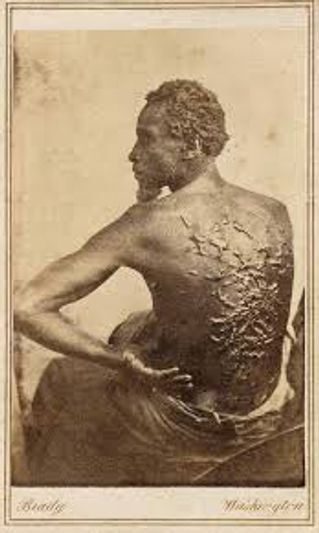
Many Thousands Gone: The First Two Centuries of Slavery in North America by Ira Berlin
A survey of slavery’s very long history in North America, showing how the institution changed over time and how it differed from state to state.
Closer to Freedom: Enslaved Women and Everyday Resistance in the Plantation South by Stephanie Camp
This book explores the world of enslaved women, and, as the title suggests, focuses on their ability to resist the enormous oppression they lived under. From sewing fancy dresses to putting up a picture of Abraham Lincoln, enslaved women tried to maintain some of their dignity and push back against the overwhelming power of their captors.
James Henry Hammond and the Old South: A Design for Mastery by Drew Faust
A study of one of South Carolina’s most important planters, the man who declared that cotton was “king,” this book pays close attention both to life on the plantation and Hammond’s pro-slavery politics.
Nothing But Freedom: Emancipation and Its Legacy by Eric Foner
Foner examines the aftermath of emancipation, showing how the struggle for freedom unfolded on plantations, in state houses and within the federal government, and how formerly enslaved workers pushed for a capacious understanding of freedom that included social, political and economic rights.
Out of the House of Bondage: The Transformation of the Plantation Household by Thavolia Glymph
A brilliant analysis of the relations between black and white women, enslaved and free, in the plantation households of the South, a relationship full of violence.
A Nation Under Our Feet by Steven Hahn
Steven Hahn’s Pulitzer-Prize winning A Nation Under Our Feet: Black Political Struggles in the Rural South from Slavery to the Great Migration charts the long-term history of African-American politics and how that politics emerged during the era of slavery.
Trail of Tears: The Rise and Fall of the Cherokee Nation by Theda Perdue
A detailed account of the forced removal of the Cherokee people.
Ebony and Ivy: Race, Slavery, and the Troubled History of America's Universities by Craig Wilder
This book addresses slavery’s impact in a place few have looked before—the nation’s institutions of higher learning. He shows how enslaved workers helped build the nation’s most elite universities and how these institutions all too often defended the interests of powerful slaveholders and gave “scientific” legitimacy to racism.
Soul by Soul: Life Inside the Antebellum Slave Market by Walter Johnson
An examination of the heart of slavery—the slave market—that provides a wrenching analysis of the processes through which millions of people were made into commodities.
The Counterrevolution of Slavery by Manisha Sinha
Manisha Sinha’s The Counterrevolution of Slavery: Politics and Ideology in Antebellum South Carolina focuses on slave owners’ political mission to create a state whose central duty was the defense of slavery. Sinha shows that nowhere did the politics of slavery take on a more radical and anti-democratic form than in antebellum South Carolina.
The Internal Enemy: Slavery and War in Virginia, 1772-1832 by Alan Taylor
This is a Pulitzer Prize winning account of the politics of slavery in Virginia in the age of revolution. Moving from the plantation to global politics, Taylor shows how enslaved workers played an important role in the struggle with the British, and how important slavery was to both the creation of the American republic and the fault lines that would eventually result in a war between the states.Offers a broad overview of Native American history, emphasizing Native perspectives and the impact of colonization on the U.S.
children's books About Girl Power

Ada Twist, Scientist by Andrea Beaty
A story about a young girl with a passion for science and discovery.
Inspired by real-life makers Ada Lovelace and Marie Curie, this beloved #1 bestseller champions STEM, girl power and women scientists in a rollicking celebration of curiosity, the power perseverance, and the importance of asking “Why?”
Dragons Don't Dance Ballet by Jennifer Carson
Esmeralda Dragon works the spotlight at the City Ballet, but what she really wants to do is dance.
Encouraged by her friend Harold to audition, Esmeralda takes a leap of faith only to discover that she doesn't quite fit in with the other ballerinas. But Esmerelda isn't ready to give up--and neither is Harold!
A whimsical picture book that challenges body image expectations.
Girls on the Rise by Amanda Gorman
Who are we? We are a billion voices, bright and brave; we are light, standing together in the fight.
Girls are strong and powerful alone, but even stronger when they work to uplift one another. In this galvanizing original poem by presidential inaugural poet Amanda Gorman, girls and girlhood are celebrated in their many forms, all beautiful, not for how they look but for how they look into the face of fear. Creating a rousing rallying cry with vivid illustrations by Loveis Wise, Gorman reminds us how girls have shaped our history while marching boldly into the future.
Esteem and Resilience (A Million Mistakes Series) by Brenda Li
A powerful, award-winning growth mindset book that builds resilience in children and prepares them for life's adversities. Kids will feel strong, confident, and ready to pursue their biggest dreams!
“This inspiring story teaches kids that it's okay to make mistakes. It regulates difficult emotions and shows young minds how to turn frustration into perseverance.” - Teacher Review
Includes effective mindful, positive affirmations to build self-esteem and self-confidence:
"I can do this. I am strong. I am unstoppable."
Celebrate Your Body (and Its Changes, Too!) by Sonya Renee Taylor
A body-positive guide to help girls ages 8 to 12 navigate the changes of puberty and grow into women.
Puberty can be a difficult time for a young girl―and it's natural not to know who (or what) to ask. Celebrate Your Body is a reassuring puberty book for girls that encourages them to face puberty and their body's changes with excitement and empowerment. From period care to mysterious hair in new places, this age-appropriate sex education book has the answers young girls are looking for―in a way that they can relate to.
Covering everything from bras to braces, this body-positive puberty book for girls offers friendly guidance and support for when it's needed most. In addition to tips on managing intense feelings, making friends, and more, this book provides advice on what to eat and how to exercise so your body is healthy, happy, and ready for the changes ahead.
ABC What Can She Be? Girls can be anything they want to be, from A to Z by Sugar Snap Studio
ABC What Can She Be? presents a world of possibilities—from astronaut to zoologist and everything in between—for all little girls with big dreams.
Not even the sky is the limit with this fun approach to learning the alphabet! This book from Walter Foster Jr. encourages young girls by presenting a colorful variety of choices for their future careers. Talented illustrator Jessie Ford artfully pairs the letters of the alphabet with vibrant, eye-catching illustrations that paint an inspiring picture for budding trailblazers everywhere. Representing all kinds of girls, ABC What Can She Be? depicts girls with different colors, sizes, shapes, and abilities in both traditional and nontraditional occupations.
Rosie Revere, Engineer by Andrea Beaty
In this beloved New York Times bestselling picture book, meet Rosie Revere, a seemingly quiet girl by day but a brilliant inventor of gizmos and gadgets by night.
Rosie dreams of becoming a great engineer, and her room becomes a secret workshop where she constructs ingenious inventions from odds and ends. From hot dog dispensers to helium pants and python-repelling cheese hats, Rosie's creations would astound anyone—if only she'd let them see.
But Rosie is afraid of failure, so she hides her inventions under her bed. That is, until her great-great-aunt Rose (also known as Rosie the Riveter) pays her a visit. Aunt Rose teaches Rosie that the first flop isn't something to fear; it's something to celebrate. Failure only truly happens if you quit. And so, Rosie learns to embrace her passion, celebrate her missteps, and pursue her dreams with persistence.
children's books About Slavery

Many Thousand Gone by Virginia Hamilton
Virginia Hamilton’s widely hailed Many Thousand Gone shows readers the trajectory of slavery in the United States through the people who lived it. Told in three parts — “Slavery in America,” “Running-Aways,” and “Exodus to Freedom” — Hamilton presents a comprehensive history of the institution of slavery in the U.S., from its introduction in the colony of Virginia in 1619. (Ages 3 - 7)
Before She Was Harriet by Lesa Cline-Ransome
A biography in verse paired with brilliant watercolor illustrations, Before She Was Harriet traces the life of the well-known abolitionist in reverse chronological order, revealing the many names and roles that the woman we know as Harriet Tubman held during different periods of her life. Spy, suffragist, slave, daughter; General Tubman, Moses, Minty, Araminta. (Ages 4 - 8)
Show Way by Jacqueline Woodson
In Show Way, author Jacqueline Woodson shares a tradition passed down through the generations from mothers to daughters, including in Woodson’s own family. To the untrained eye, Show Ways are simply quilts; but to those who created them, and those whom the quilts sought to free, they contained secret messages to help slaves find their way to freedom. Born free, a young girl named Soonie learns how to sew quilts, just like the women before her. (Ages 4 - 8)
Overground Railroad by Lesa Cline-Ransome
When Ruth Ellen and her parents climb aboard the Silver Meteor train bound for New York, they also join the ranks of millions of African Americans, some formerly enslaved and others born free, who leave the South in the hope of a better life during an era now known as the Great Migration. As Ruth Ellen observes her changing surroundings, she reads from Narrative of the Life of Frederick Douglass and finds similarities between her journey and Douglass’s. (Ages 4 - 8)
The Patchwork Path by Bettye Stroud
The Patchwork Path features secretly coded quilts, with the young girl at the center of the story following the secrets toward freedom. Alongside her Papa, Hannah deciphers the precious gift from Mama and makes the brave and perilous journey north from Georgia. Hannah and her father embody the stories of thousands of slaves who risked everything to be free. (Ages 5 - 8)
From Slave Ship to Freedom Road by Julius Lester
“I think often of those ancestors of mine whose names I did not know, whose names I will never know, those ancestors who saw people thrown into the sea like promises casually made and easily broken.” So begins Julius Lester’s profound and crucial history of slavery in America for older readers, starting with the devastating conditions of the slave ships traveling the Middle Passage and concluding, finally, with freedom. (Ages 8 - 12)
Trailblazers: Harriet Tubman by Sandra A. Agard
From the inspiring Trailblazers series comes a riveting biography of Harriet Tubman, ideal for middle grade readers. Although she secured freedom for herself as she crossed the Mason-Dixon line — having endured a dangerous, nearly 100-mile journey — Tubman couldn’t rest until she’d led as many others to freedom as she could. In addition to details of Tubman’s life, readers will learn important historical context — including the conditions of slavery and the divide between the North and South. (Ages 8 - 12)
Children's Books About Native Americans

Firefly Season by Cynthia Leitich Smith
Piper feels grateful for visits with her relatives, especially for the time spent with her cousins in Cherokee Nation and Muscogee Nation during summer vacations, fishing on misty mornings and playing on firefly-filled evenings. Piper’s family lives a road trip away in Kansas City. So when a neighbor named Sumi moves in next door, Piper is excited to share her stories and seasons with a new friend.
The two are inseparable—until Piper’s family moves to another city. Their bond overcomes distance, and with time, Piper dreams up a plan to reunite with the people she loves most of all.
Raven's Ribbons by Tasha Spillett
From New York Times bestselling author Tasha Spillett and illustrator Daniel Ramirez comes a joyous intergenerational celebration of gender self-expression and acceptance through an Indigenous lens.
Raven loves Round Dances. The drums sing to the people. The people dance to the music. Raven’s favorite part is to watch the ribbon skirts, swirling like a rainbow. He wishes he could have a ribbon skirt of his own, but his grandmother has never seen a boy wearing one. Until the next round dance, when it turns out that even someone who has lived a long time can see wonderful things that they’ve never seen before.
On Powwow Day by Traci Sorell
In this board book by best-selling Native author Traci Sorell, discover colors, sounds, and counting from one to ten on powwow day!
This eye-catching, interactive board book is sure to keep toddlers engaged. Count one through ten as you make your way through the day of the powwow, looking for colors, family members, jingle dresses, musical instruments, and tribal citizens in this introduction to a traditional Native event.
The Gift of the Great Buffalo by Carole Lindstrom
In this beautiful and dramatic story, bestselling author Carole Lindstrom and illustrator Aly McKnight show readers how life was lived by Indigenous communities, offering the true history of life on the prairie.
Rose is a young Métis-Ojibwe girl who has traveled far with her family for the biannual buffalo hunt made up of hundreds of other Métis families. The ritual of the hunt has been practiced for generations, and each hunt must see the community through the next six months. But in recent years, the buffalo population has dwindled, and after days on the hunt, there are no buffalo to be found. Can Rose help her family find the herd that will enable them to survive the long winter?
The Summer of the Bone Horses: A Chapter Book by Virginia Driving Hawk Sneve
A Lakota child spends a summer with grandparents at their home on the Rosebud Reservation in this young chapter book, illustrated in full-color.
When Eddie’s parents drive from the Black Hills to the Dakota plains to drop him off with Grandpa and Grandma High Elk, Eddie aches all over at the thought of being away from Mom and Dad for the first time.
But quickly, Eddie’s stay on the Rosebud Reservation becomes a summer that he’ll never forget as he spends his days riding horses, fishing, helping Grandma in her garden, and playing with the toy bone horses that his grandfather gave him. When his grandfather is hurt and needs medical attention, Eddie steps up and helps him get the care he needs.
Coming Home: A Hopi Resistance Story by Mavasta Honyouti
From master Hopi woodcarver Mavasta Honyouti, the story of his grandfather’s experience at a residential boarding school and how he returned home to pass their traditions down to future generations.
When Mavasta Honyouti was a boy he would go with his grandfather to their cornfield, watching him nurture every plant. During breaks, his grandfather would take out a piece of paako root and use his pocketknife to whittle away. He made beautiful carvings that Mavasta would later learn to do himself.
But Mavasta would often wonder: what was his kwa’a like when he was a boy? And one day, he heard the story.
Coming Home: A Hopi Resistance Story is a deeply personal book – written in both English and Hopi – that features sixteen stunning original painted wood carvings. It is an unforgettable testament to one man rising above a painful piece of history to keep the light of his family and culture alive.
To Walk the Sky: How Iroquois Steelworkers Helped Build Towering Cities by Patricia Buckley
High above the ground, generation after generation, Native workers called skywalkers have sculpted city skylines, balancing on narrow beams, facing down terrifying heights and heartbreaking loss. These skywalkers who dared to touch the heavens have built a legacy of landmarks all over the North American continent—and even today, there are Native Americans still climbing up among the clouds, brave enough to walk the sky.
With impactful and illuminating prose, Patricia Morris Buckley (Mohawk) tells the soaring story of the remarkable skywalkers, whose bravery and tragedies are warmly captured in moving watercolors by award-winning artist E. B. Lewis (Lenni-Lenape).
Finding My Dance by Ria Thundercloud
In her debut picture book, professional Indigenous dancer Ria Thundercloud tells the true story of her path to dance and how it helped her take pride in her Native American heritage.
At four years old, Ria Thundercloud was brought into the powwow circle, ready to dance in the special jingle dress her mother made for her. As she grew up, she danced with her brothers all over Indian country. Then Ria learned more styles--tap, jazz, ballet--but still loved the expressiveness of Indigenous dance. And despite feeling different as one of the only Native American kids in her school, she always knew she could turn to dance to cheer herself up.
Follow along as Ria shares her dance journey--from dreaming of her future to performing as a professional--accompanied by striking illustrations that depict it while bringing her graceful movements to life.
LGBTQ Children's Books
Bodies Are Cool by Tyler Feder
Bodies Are Cool is a body-positive picture book that takes a casual approach to queer representation. depicts a diverse array of bodies—of all shapes, sizes, races, and genders, including post-top-surgery trans bodies—paired with playful rhyming text.
Federico and All His Families by Mili Hernández
This colorful board book tells the story of a helpful neighborhood cat who visits different families as they prepare to start their day, including families with two moms and two dads, a single-parent family, and one with grandparents raising a child.
A Family Is a Family Is a Family by Sara O’Leary
This picture book tells the story of a class of kids asked to share what makes their families special. The young narrator is initially afraid that her family might be too different to include, but she’s soon proved wrong by other kids’ comical depictions of their own diverse households, including families with divorced parents, foster kids, lots of grandparents, two dads, and two moms who are “terrible singers” but nevertheless “love to sing really loud.”
When Aidan Became a Brother by Kyle Lukoff
When Aidan Became a Brother is recommended by multiple queer librarians and booksellers for iheartwarming tale of a family navigating their son’s emerging trans identity while they prepare to welcome a second child. “When Aidan was born, everyone thought he was a girl,” the book starts. But as Aidan grew older, he began to realize he was “a different type of boy.” Although “it was hard to tell his parents what he knew about himself, it was even harder not to.”
Julián Is a Mermaid by Jessica Love
Julián Is a Mermaid tells the story of Julián, a young boy who has some apprehension about sharing his love of makeup, flowy hair, and mermaid role-play with his abuela. But to his surprise, she embraces and celebrates his interests by taking him to the annual Coney Island Mermaid Parade in New York City, where Julián struts down the boardwalk in makeshift mermaid regalia as his glamorous authentic self.
Julián at the Wedding by Jessica Love
Julián at the Wedding, the sequel to Julián Is a Mermaid, shows Julián making delightful mischief at a lesbian wedding with a new friend named Marisol, a little girl who’s equally authentic to herself.
Pride: The Story of Harvey Milk and the Rainbow Flag by Rob Sanders
So many kids have encountered the rainbow equality flag, whether posted in the window of a local shop or flying from a neighbor’s porch. But because LGBTQ history is so rarely taught in school, most don’t have a sense of the history of that flag or the context—and recency—of modern Pride movements.
The book tells the origin story of the Pride flag through welcoming text and colorful, panoramic illustrations.
My Maddy by Gayle E. Pitman
My Maddy introduces kids to a nonbinary parent while highlighting the beauty of other things that defy easy categorization, like sporks, motorcycles, and hazel eyes.
A Princess of Great Daring! by Tobi Hill-Meyer
This book is about a trans girl coming out to her friends for the first time while they’re playing a make-believe game involving princesses and dragons.
The Every Body Book by Rachel E. Simon
The Every Body Book: The LGBTQ+ Inclusive Guide for Kids About Sex, Gender, Bodies, and Families covers big topics like puberty, hormones, pregnancy, and childbirth—and briefly even miscarriage, abortion, birth control, and safer sex in a gender-inclusive way.
Last Night at the Telegraph Club by Malinda Lo
This National Book Award–winning YA novel places queer youth in a historical context via the tale of a Chinese-American teen navigating her sexuality at the time of the Red Scare in 1954.
The book’s author, Malinda Lo, has written a number of beloved YA books with queer characters. Lo is also the founder of Diversity in YA, a volunteer-run blog that promotes young adult books featuring disabled and LGBTQ characters as well as people of color.